
Understanding Post-Traumatic Stress Disorder: Healing from Trauma's Echoes
Understanding PTSD: Symptoms & Coping

The echoes of a traumatic event can linger long after the experience itself has passed, profoundly affecting your daily life, relationships, and sense of self. For many high-achieving individuals in Jupiter, FL, the pressure to 'be strong' or 'move on' can make acknowledging and addressing these challenges even more difficult. If you've experienced a significant trauma, you might find yourself struggling with persistent unsettling symptoms, feeling isolated, or wrestling with an anxiety that seems to permeate every aspect of your existence. This isn't a sign of weakness; it's a natural, though distressing, response to overwhelming circumstances. Understanding these reactions is the first vital step toward healing.
At Nurture Health, we recognize the profound impact that trauma can have. Our compassionate approach focuses on providing clear, professional insights into Post-Traumatic Stress Disorder (PTSD) and guiding you toward effective strategies for recovery. This post aims to demystify PTSD, help you recognize its common symptoms, and introduce you to practical coping mechanisms, alongside the crucial role of professional trauma therapy in reclaiming your peace.
Understanding PTSD: More Than Just "Bad Memories"
Post-Traumatic Stress Disorder (PTSD) is a mental health condition that some people develop after experiencing or witnessing a terrifying event. It's not just about having unpleasant memories; it's a complex set of reactions that can fundamentally alter how your brain processes safety, threat, and information. While it's natural to experience fear, anxiety, and sadness after a traumatic event, for individuals with PTSD, these feelings don't diminish over time. Instead, they can intensify, leading to significant distress and impairment in various areas of life.
The events that can lead to PTSD are diverse and deeply personal. They might include combat exposure, natural disasters, serious accidents, terrorist acts, sexual assault, physical assault, or other forms of violence. Even witnessing such events, or learning about a violent or accidental death of a close family member or friend, can be a pathway to developing PTSD. It's crucial to remember that your experience is valid, regardless of the specific event.
What PTSD Feels Like: A Glimpse into the Experience
Living with PTSD often feels like being perpetually on high alert, even when there's no immediate danger. You might describe it as:
Feeling constantly jumpy, as if danger is lurking around every corner.
A pervasive sense of unease or dread that you can't shake.
Reliving the traumatic event through vivid flashbacks or nightmares, making it feel as though you're stuck in a loop.
Struggling to connect with loved ones, feeling emotionally numb or detached.
A profound sense of guilt or shame, wondering if you could have done something differently.
An overwhelming desire to avoid anything that reminds you of the trauma, even if it means isolating yourself from activities or people you once enjoyed.
Difficulty concentrating, making decisions, or experiencing a sense of brain fog.
Unexplained physical symptoms, like headaches, stomach issues, or chronic fatigue, often stemming from chronic stress.
These feelings are not imagined; they are real physiological and psychological responses to an overwhelmed nervous system. They can be incredibly debilitating, impacting your career, relationships, and overall quality of life.
Common PTSD Symptoms: Recognizing the Signs
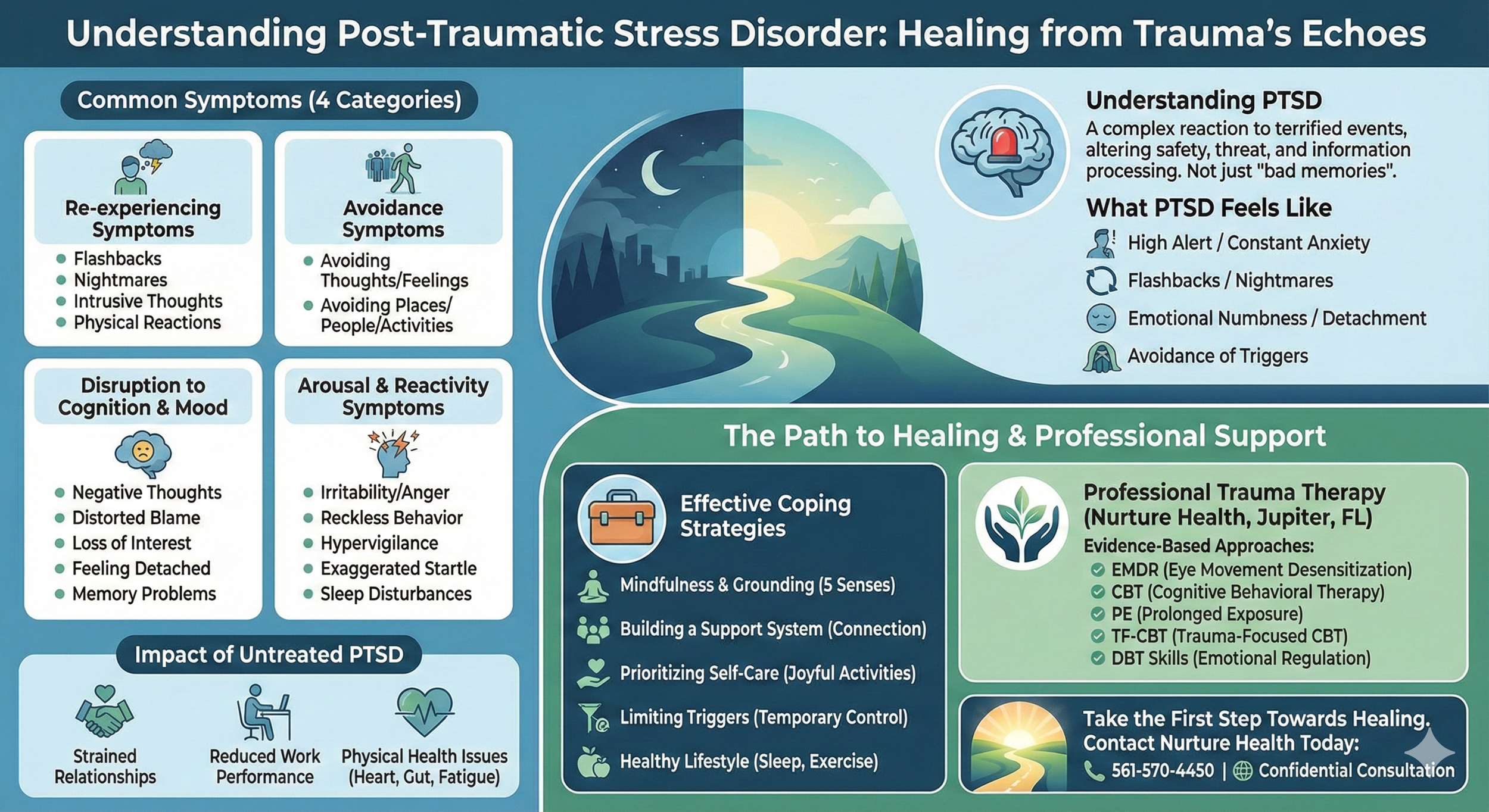
PTSD symptoms are generally grouped into four main categories. While not everyone will experience every symptom, recognizing these patterns can be helpful in identifying if you or someone you know might be struggling.
Re-experiencing Symptoms: These are often the most recognized symptoms and involve reliving the traumatic event.
Flashbacks: Feeling or acting as if the traumatic event is happening again. These can be incredibly vivid and disorienting.
Nightmares: Disturbing dreams about the trauma or other frightening scenarios.
Intrusive Thoughts: Unwanted, distressing memories that pop into your mind unexpectedly.
Physical Reactions: Experiencing intense physical reactions (e.g., sweating, racing heart, increased blood pressure) to reminders of the trauma.
Avoidance Symptoms: To cope with the distress of re-experiencing, individuals often try to avoid anything associated with the trauma.
Avoiding Thoughts/Feelings: Actively trying not to think or talk about the traumatic event.
Avoiding Places/People/Activities: Staying away from specific locations, people, objects, or situations that remind you of the trauma. This can lead to significant social isolation.
Disruption to Cognition and Mood: Trauma can profoundly alter how you think and feel about yourself, others, and the world.
Negative Thoughts: Persistent negative beliefs about oneself (e.g., "I am bad," "I am worthless") or the world (e.g., "The world is entirely dangerous").
Distorted Blame: Blaming oneself or others for aspects of the traumatic event that were beyond their control.
Loss of Interest: Markedly diminished interest or participation in significant activities.
Feeling Detached: Feelings of estrangement or detachment from others.
Inability to Experience Positive Emotions: Difficulty experiencing happiness, satisfaction, or loving feelings.
Memory Problems: Inability to remember important aspects of the traumatic event.
Arousal and Reactivity Symptoms: These symptoms involve being constantly on guard, leading to an exaggerated startle response and difficulty regulating emotions.
Irritability and Anger Outbursts: Unprovoked anger or irritability, often disproportionate to the situation.
Reckless or Self-Destructive Behavior: Engaging in impulsive or dangerous behaviors.
Hypervigilance: Constantly being on the lookout for potential threats, even in safe environments.
Exaggerated Startle Response: Jumping or being easily startled by sudden noises or movements.
Concentration Problems: Difficulty focusing on tasks or conversations.
Sleep Disturbances: Insomnia, restless sleep, or difficulty falling/staying asleep.
It's important to note that these symptoms must last for more than one month and cause significant distress or impairment in your daily life to be considered PTSD. For more detailed information on diagnostic criteria, you can refer to resources like the National Institute of Mental Health (NIMH).
The Impact of Untreated PTSD on Daily Life
The ripple effects of untreated PTSD can be far-reaching, affecting nearly every facet of your existence. In Jupiter, FL, where many lead demanding lives, the silent struggle with PTSD can erode professional performance, strain personal relationships, and diminish the joy once found in hobbies and community involvement. You might find yourself withdrawing from social gatherings, struggling to maintain focus at work, or experiencing persistent relational conflicts due to emotional volatility or detachment. The chronic stress associated with PTSD can also take a significant toll on your physical health, contributing to conditions such as heart disease, digestive issues, and weakened immune function. The constant state of alert can lead to chronic fatigue, making even simple daily tasks feel overwhelming. Furthermore, PTSD often co-occurs with other mental health challenges, such as Depression Therapy and substance use disorders, creating a complex web of difficulties that can feel impossible to untangle alone.
Effective Coping Strategies for Managing PTSD Symptoms
While professional help is paramount for long-term healing, several coping strategies can help manage symptoms in the short term and complement therapy. These strategies are about building resilience and creating a sense of safety within yourself.
Mindfulness and Grounding Techniques: When flashbacks or intense emotions arise, grounding techniques can help bring you back to the present moment. Focus on your five senses: What do you see, hear, smell, taste, and feel? Deep breathing exercises can also calm your nervous system. Mindfulness practices cultivate present-moment awareness, reducing the power of intrusive thoughts and emotional reactivity.
Building a Strong Support System: Connecting with trusted friends, family, or a support group can provide validation and reduce feelings of isolation. Sharing your experiences with understanding individuals, when you feel ready, can be incredibly therapeutic.
Prioritizing Self-Care: Engage in activities that genuinely bring you comfort and joy. This might include a relaxing bath, reading a book, spending time in nature, or listening to calming music. Self-care is not a luxury; it's a necessity for emotional regulation and resilience.
Limiting Triggers (Where Possible): While complete avoidance isn't a long-term solution, temporarily reducing exposure to known triggers can provide a sense of control and prevent overwhelming episodes. This might involve being mindful of certain news content, movies, or social situations that you know are particularly activating.
Healthy Lifestyle Choices: A balanced diet, regular physical activity, and adequate sleep are foundational for mental health. Exercise, in particular, can be a powerful tool for stress reduction and mood regulation, helping to discharge pent-up energy and anxiety. Limiting caffeine and alcohol intake can also prevent exacerbating anxiety and sleep disturbances.

These strategies are valuable tools, but they are most effective when used in conjunction with professional guidance. They are not a substitute for the specialized care required for PTSD recovery.
How Professional Trauma Therapy Helps in Jupiter, FL
Seeking professional help is not just an option; it's often the most effective and compassionate path to healing from PTSD. In Jupiter, FL, Nurture Health offers a safe and confidential space where you can process your experiences, develop advanced coping mechanisms, and ultimately reclaim your life from trauma's grip. Our therapists are highly trained in evidence-based approaches specifically designed for PTSD treatment.
Evidence-Based Approaches: We utilize therapies that have been rigorously tested and proven effective for PTSD. These include:
Eye Movement Desensitization and Reprocessing (EMDR): A powerful therapy that helps individuals process traumatic memories and reduce their emotional impact.
Cognitive Behavioral Therapy (CBT): Helps you identify and challenge negative thought patterns and behaviors related to the trauma, fostering healthier coping responses.
Prolonged Exposure (PE): Gradually exposes you to trauma-related memories, feelings, and situations to help you reduce avoidance and emotional numbing.
Trauma-Focused Cognitive Behavioral Therapy (TF-CBT): A specialized form of CBT tailored for children and adolescents, but principles can be adapted.
Dialectical Behavior Therapy (DBT) Skills: Can be integrated to enhance emotional regulation, distress tolerance, and interpersonal effectiveness, particularly helpful for managing intense emotional reactions.
Safe and Supportive Environment: Our practice provides a non-judgmental, empathetic space where you can feel secure enough to explore difficult memories and emotions at your own pace. Building trust with your therapist is a cornerstone of effective anxiety relief and trauma recovery.
Personalized Treatment Plans: We understand that every individual's experience with trauma is unique. Our therapists work collaboratively with you to create a personalized treatment plan that addresses your specific symptoms, history, and goals, ensuring the most effective path to healing.
Building Resilience: Beyond symptom reduction, therapy helps you build lasting resilience, empowering you with skills to navigate future stressors and live a fuller, more meaningful life. You'll learn to re-establish a sense of safety, regain control, and reconnect with your inner strength.
Taking the First Step Towards Healing
Understanding PTSD symptoms and exploring coping strategies is a powerful first step. However, true and lasting healing from trauma often requires the guidance of a skilled and compassionate professional. You don't have to carry the burden of trauma alone. At Nurture Health in Jupiter, FL, we are here to support you in navigating your healing journey, helping you move from a place of distress to one of peace and empowerment.
If you recognize these symptoms in yourself or a loved one, we encourage you to reach out. Taking this step is a testament to your strength and your commitment to your well-being. Your path to recovery and renewed hope starts here.
Contact Us Today for a confidential consultation. You can also call us at 561-570-4450 to learn more about how our expert trauma therapists can support you.
